AEN banner


MAHARAJAH JUNGLE TREK
Animal Kingdom

ANIMAL
KINGDOM


TOURING
Attraction Seating
   Photo Gallery

Basic Services
Calendar of Events
Character Meet and
   Greet FAQ

Extra Magic Hour
FASTPASS
Fun Facts
Guide Map
Kennels
Operating Hours
Overlooked Attractions
Reader Tips
Rehabs and Closures
Restaurant Photo Gallery
Ride Restrictions
Smoking Policy
Special Needs Travelers
--Animal Kingdom
    in a Wheelchair

Ticket FAQ

WDW At Large

AT A GLANCE...
Animal Species by Area
Attractions
Restaurants
Characters
Shopping

THE OASIS
Place of Transition Part I
Place of Transition Part II

DISCOVERY ISLAND
The Tree of Life
It's Tough to be a Bug
Discovery Island Trails

CAMP MINNIE-MICKEY
Festival of the Lion King
Pocahontas and Her
   Forest Friends

Character Greeting
   Trails

AFRICA
Kilimanjaro Safaris
Pangani Forest
   Exploration Trail

RAFIKI'S PLANET WATCH

ASIA
Expedition EVEREST
Flights of Wonder
Kali River Rapids
Maharajah Jungle Trek

DINOLAND U.S.A.
Dinosaur

The Boneyard
Dino-Sue
Chester and Hester's
   Dino-Rama

   --Primeval Whirl
   --Triceratop Spin
Finding Nemo: The Musical

ENTERTAINMENT
Mickey's Jammin'
   Jungle Parade

Mickey's JINGLE Jungle Parade
DiVine
Live Entertainment

Special Reports
African Comb Duck
Asian Tigers
Baby African Elephants
Capybara
Giraffe

Nile Hippopotamus
Okapi
Photo Essays
Gorillas
Faces
Hidden Mickeys
Park Details

ALL EARS®
Feature Articles
-- Animal Kingdom Turns 5
-- Kaleidoscopic Kingdoms
-- Other Side of Animal Kingdom

TOURS
-- Back Stage Safari
-- Wild by Design

ARCHIVES
Tarzan Rocks! Closed 1/06
Journey into the Jungle Book
Closed 4/99
Lucky the Dinosaur May-July 2005
March of the Artimals Closed 6/99
Radio Disney River Cruise aka
Discovery River Taxi aka
Discovery RiverBoat Ride aka
Discovery River Boats -
Retired 1999
Walk Around Artimals
Pre-Opening Guide Map

OTHER THEME PARKS
Disney's Hollywood
   Studios

Epcot
Magic Kingdom

Disneyland
Disney's California
    Adventure

INTRODUCTION

The People of Anandapur and the Royal Anandapur Wildlife and Forestry Authority trust you will enjoy your walk and ask that you respect and honor these lovely creatures with behavior appropriate for peaceful co-existence.

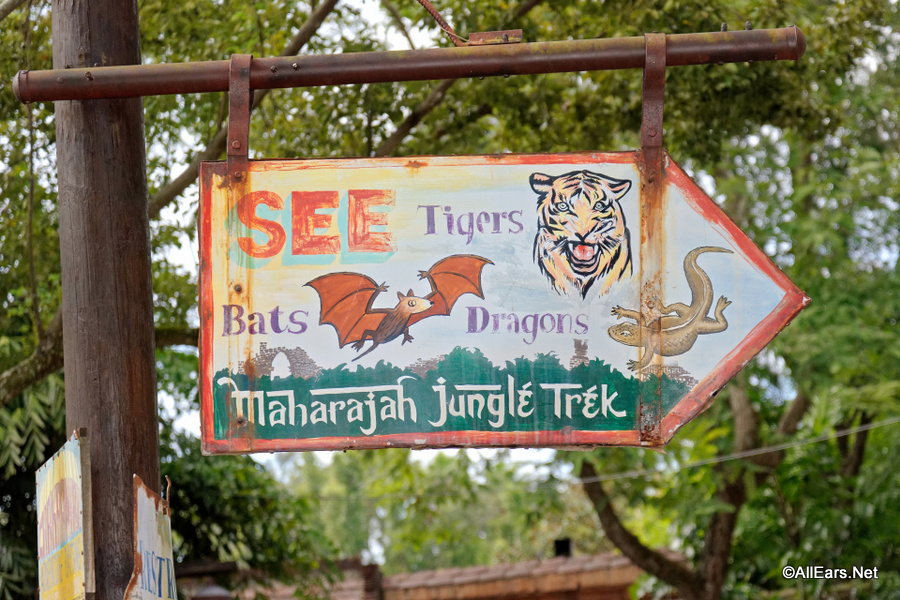
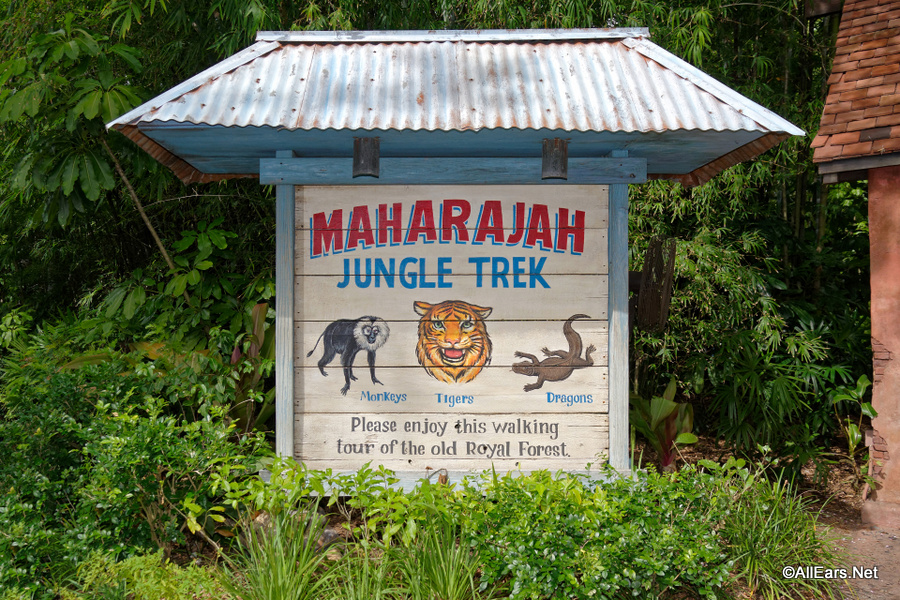
Wander through the ancient ruins of India and see tigers, bats and birds and more on this self-guided walking tour.

ATTRACTION

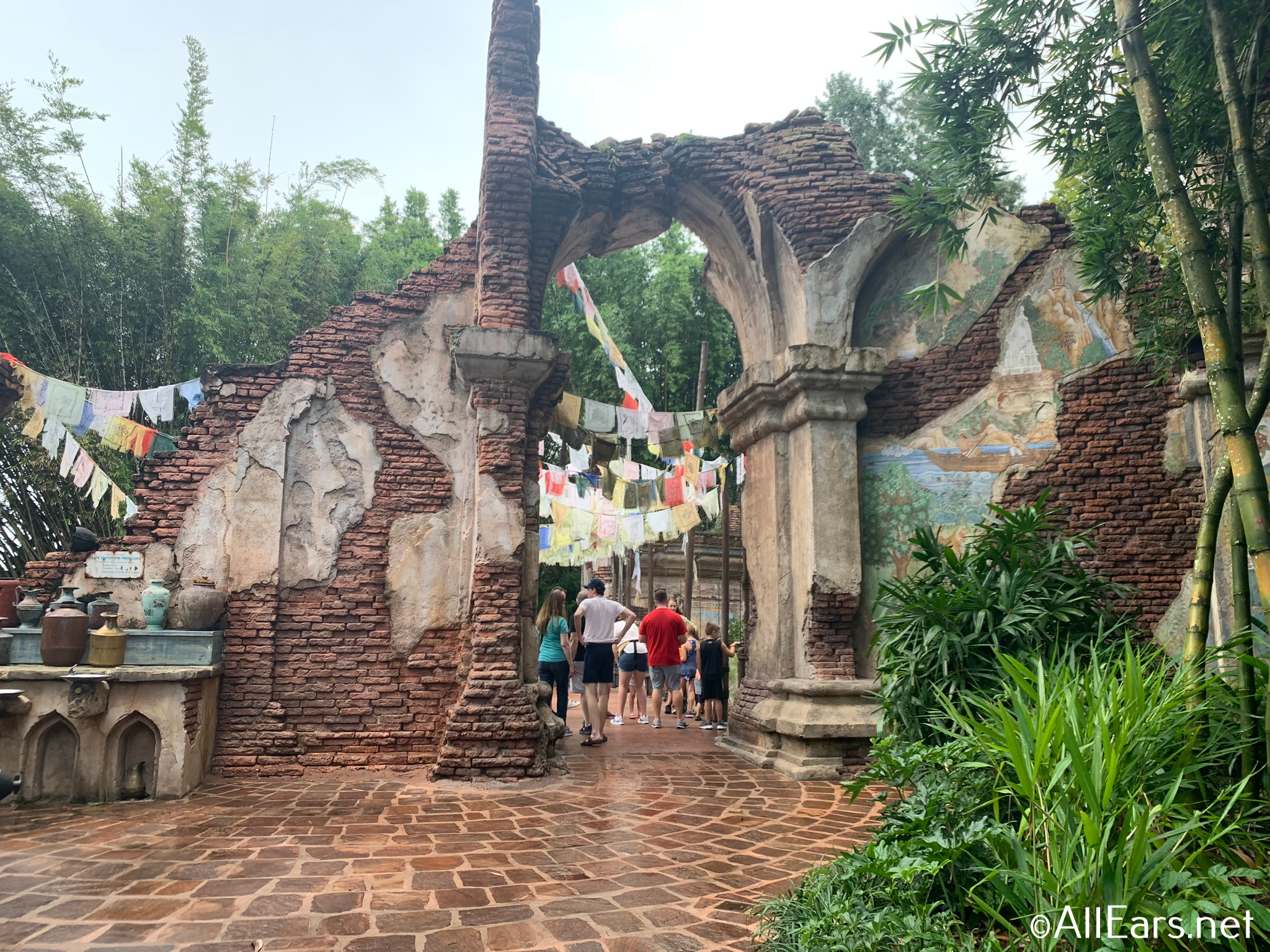
As you begin your journey through this magnificent area be sure to take time to look at the art and architecture surrounding you. Almost immediately upon entering the land of Anandapur, you will feel as though you have been transported half way around the world.
When you crossed the bridge into Asia, even before you actually enter the Maharajah Jungle Trek, chances are you heard the Gibbons!

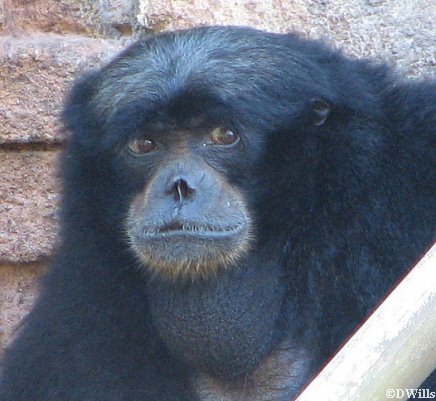
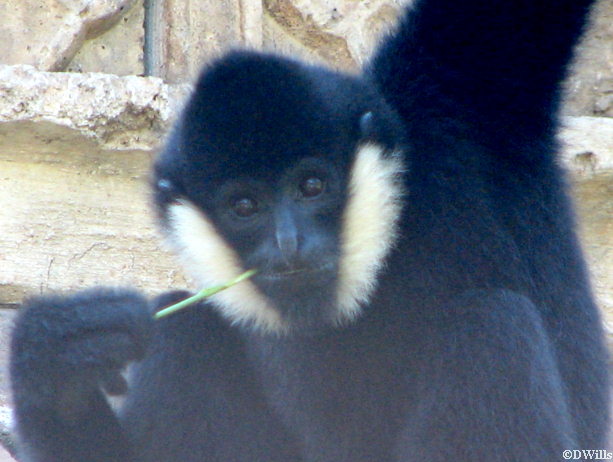
Female White-cheeked GibbonThe Gibbons are members of the ape family, not the monkey family. They have longer arms and no tails. Amid the temples and memorial pillars of Anandapur you will find the white-cheeked gibbon Hylobates concolor and the larger siamang Hylobates syndactylus. Both live in family groups.

The male gibbons are black and the females golden.  The white-cheeked gibbon live in tropical forests in Vietnam with a life span of about 25 years. 


The Siamang inhabit the tropical rain forests of the Malay Peninsula and Sumatra.

The Siamangs will likely be overhead and swinging from tower to tower. If you listen, you can hear the "hoots" that allow them to mark their territory and communicate. The Siamangs are the loudest land mammal, their vocal sac can inflate to the size of their head. They can actually get quite loud at times. Their voices can be heard up to 2 miles away.

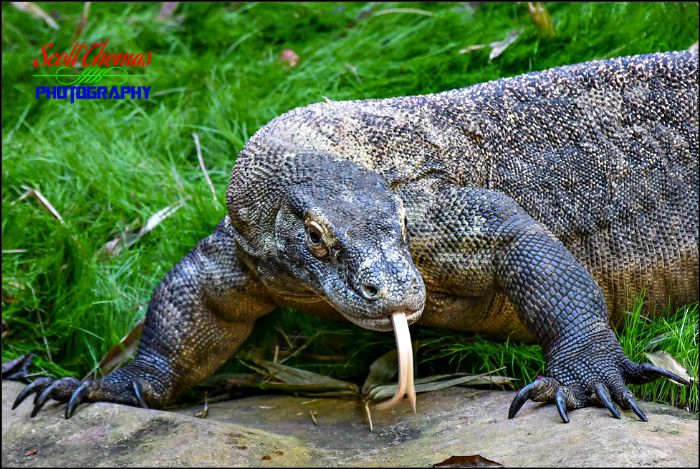
Komodo DragonCome around the bend into the first animal viewing area and discover the home of the Komodo Dragon Varanus komodoenis. Komodo dragons are indigenous to Indonesia and are the world's largest lizard. They seek warm areas during the morning and cooler areas during the day. The average life span is 20 years, however they can live to be 40-60 years old. Komodo Dragons are solitary animals except when breeding and eating.


Malayan TapirNext along the path is the female Malayan Tapir Tapirus Indicus, an endangered species. Tapir skin is very tough, like a rhino, which attracts hunters. 

Found in the deep forests in Asia, they are shy herbivores, feeding on bark, buds and leaves. When born, the Tapir skin color is all brown and later turns into the black and white you see here.


The Tapir you see here at the Animal Kingdom is 16 years old. She has very poor eyesite and relies heavily on her sense of smell. There is a small pool in the Tapir area so she can get some relief from the heat. They can grow as large as 600 pounds.

Rodrigues Fruit Bat

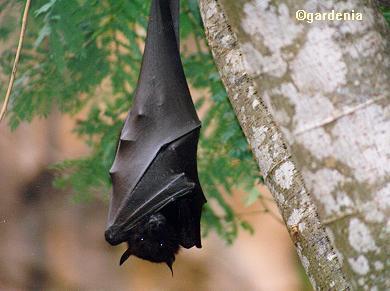
The Bat Community, home of the Rodrigues Fruit Bat Pteropus rodricensis and the Malayan Flying Fox Pteropus vampyrus is next. (There is a bypass if you wish to skip this section.)  You can see the bats hanging from the vines and trees in the enclosure. They also will sometimes wrap themselves in their paper-thin wings to preserve body hear or fan themselves to stay cool.


Malayan Flying FoxThe Rodrigues are sometimes referred to as "golden bats" because of their mantle of golden fur that covers portions of their head, neck, and shoulders and contrasts sharply with the dark brown fur over the remainder of their body. Rodigues is a small volcanic island in the Southwestern Indian Ocean.

The Malayan Flying Fox is among the largest of the bats and has a wing span of 6 feet. This largely nocturnal mammal feeds on fruit and nectar.


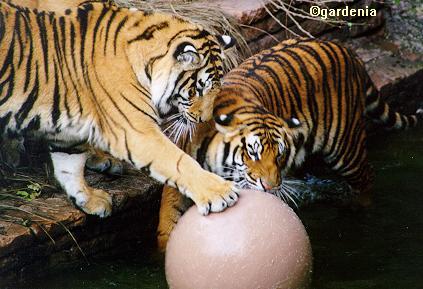
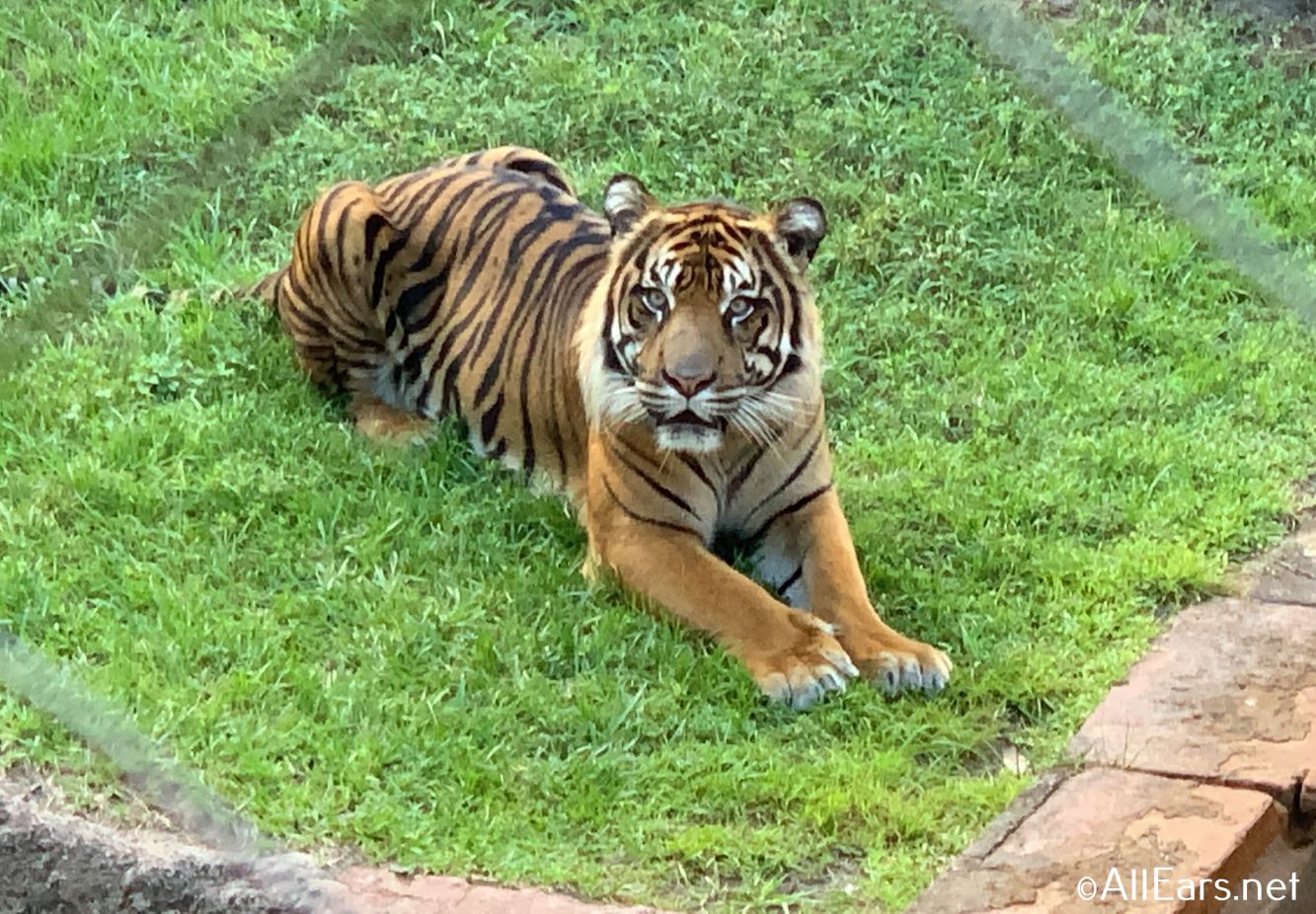
The most beautiful section of the Maharajah Jungle Trek is next which will bring you into the heart of India. It is called Tiger Forest. Paintings adorn the old crumbling wallsThere are several viewing areas for the Asian Tigers Panthera tigris.


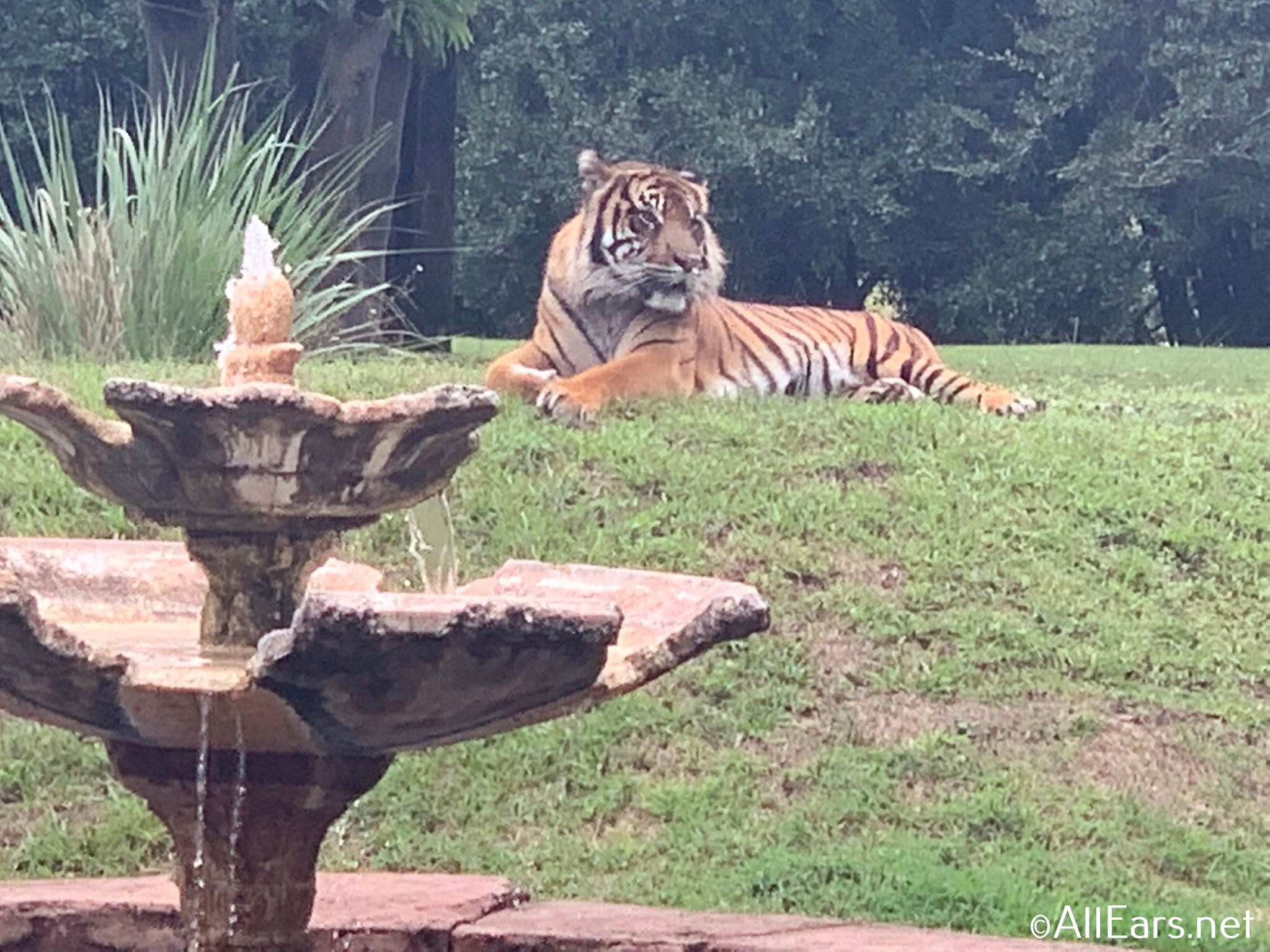
Tigers PlayingThere are 6 Female Tigers in the Maharajah collection.   Be sure to visit the Tigers in the early morning hours. They can sometimes be found stretching on a tree trunk or playing in the water.

Some of the viewing areas are through glass.  However, near the end of the tiger section is a bridge upon which you can get a good view of the Tigers and their Pond.
 

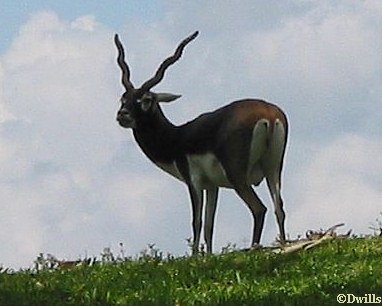
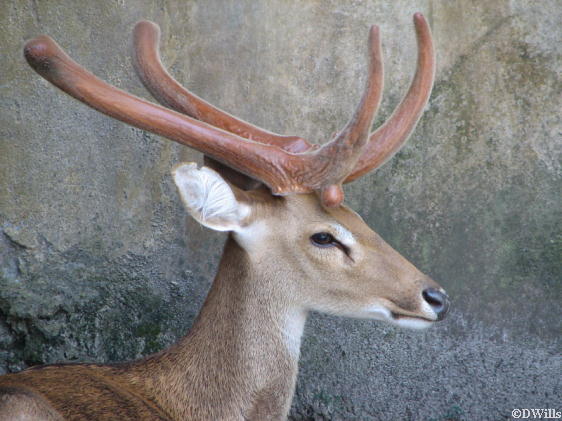
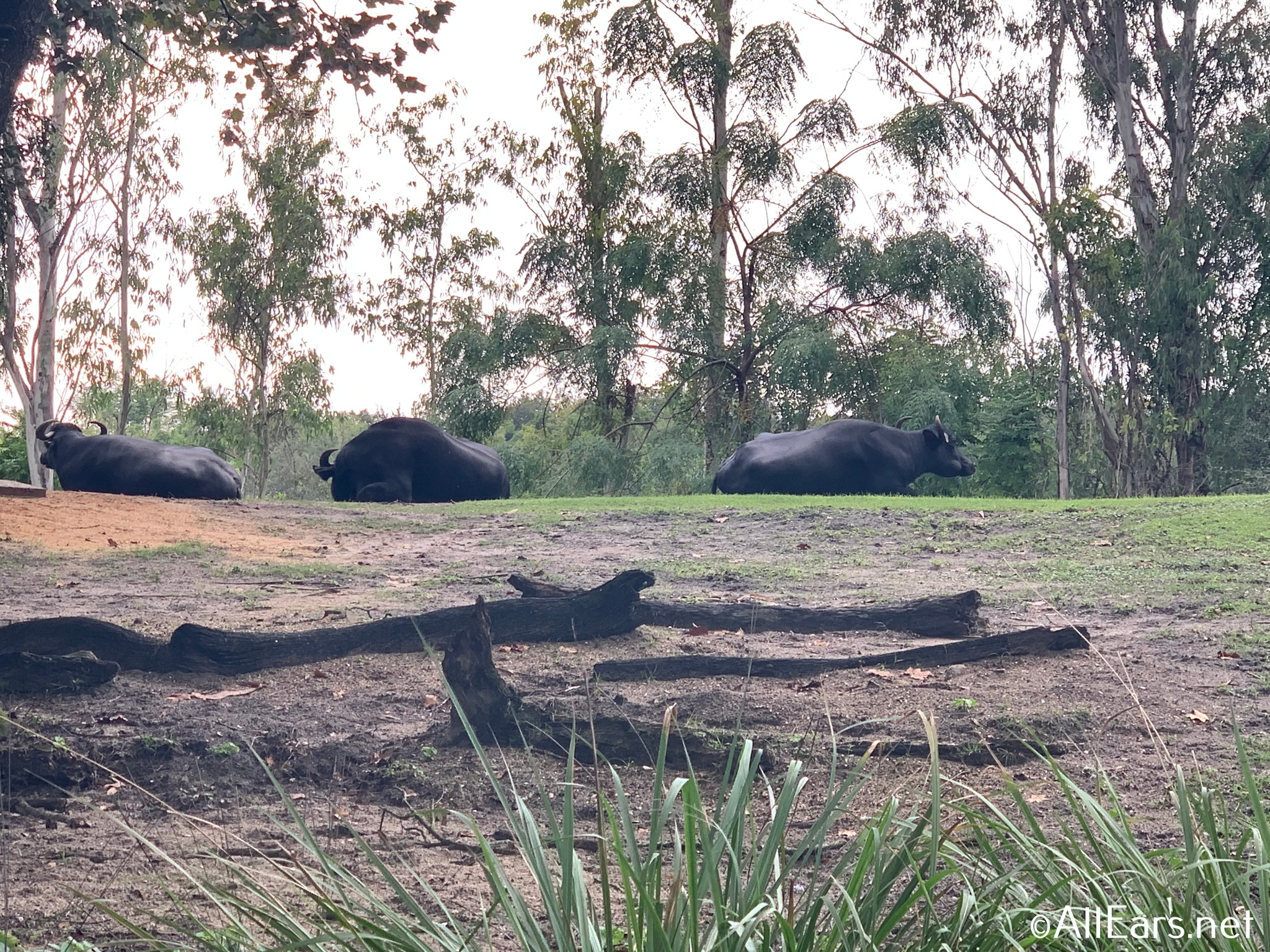
Looking left while on the bridge, you will see a field with Elds Deer and Blackbuck. The Elds Deer Cervus eldi come from Burma and eastern India. The Elds Deer are an endangered species.

Blackbuck Antilope cervicapra

The Blackbuck Antilope cervicapra are one of the fastest antelopes in the world. They can travel up to 50 miles per hour. The Blackbucks have the cork screw twisted horns.


Co-existing with the Elds Deer and Blackbuck are several species of birds. The Sarus Crane will get your attention quickly as they are the world's tallest flying bird. Males can grow to six feet tall with a ten feet wing span. Also in this area are barheaded geese and white wing wood duck, both native to South East Asia.
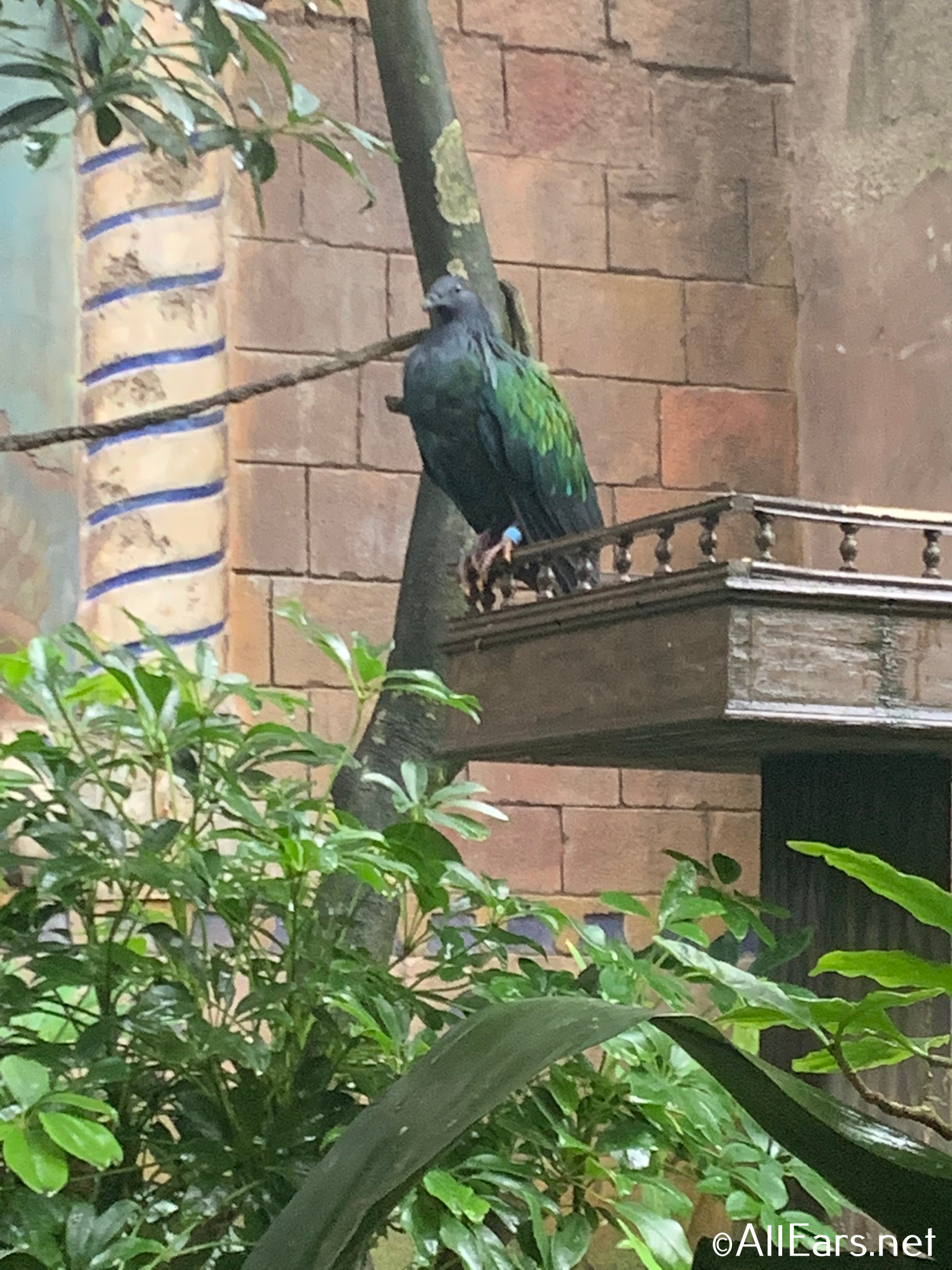
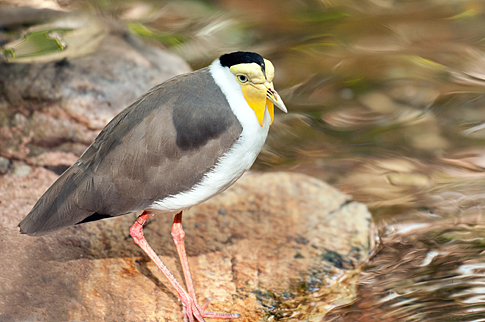
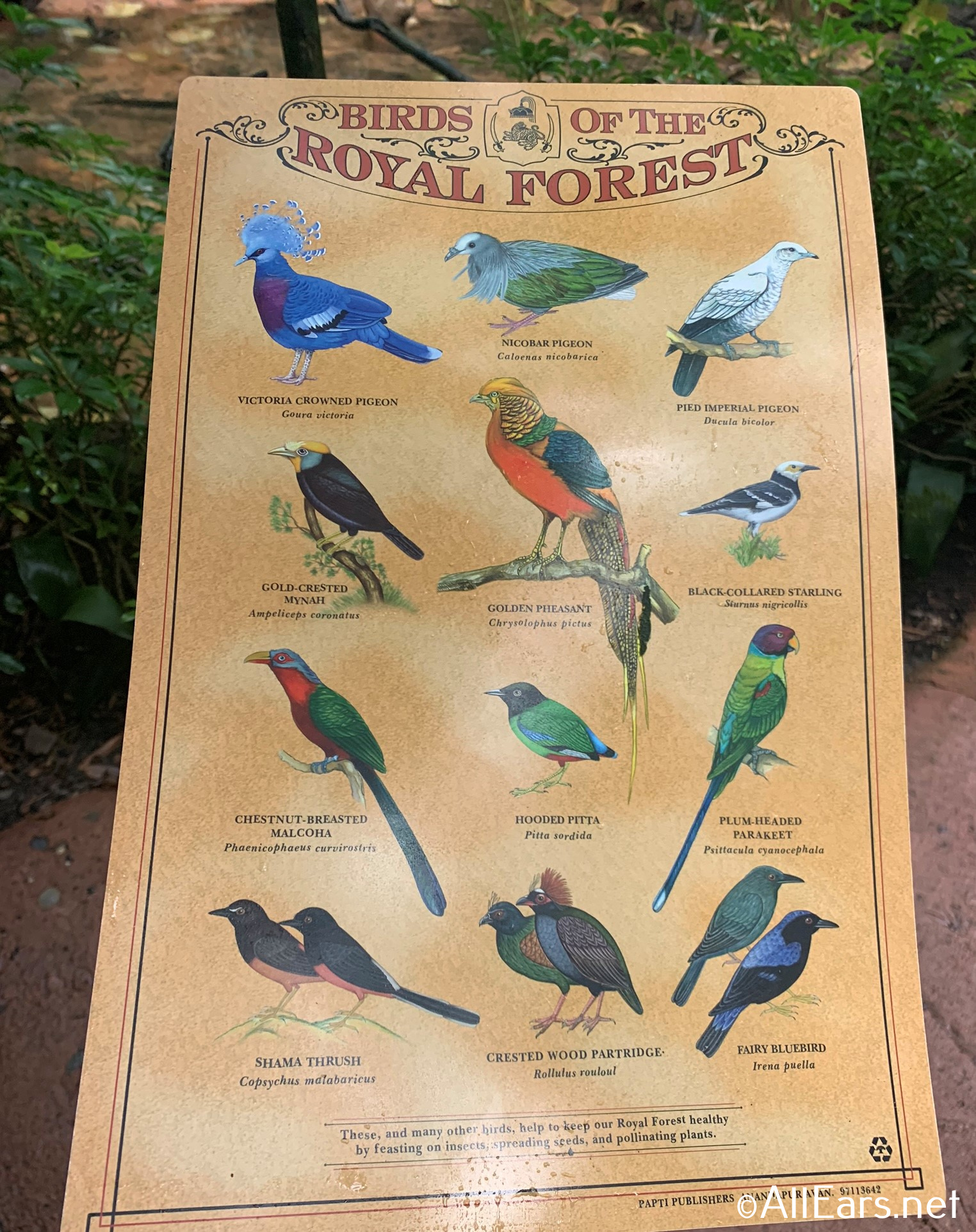
A beautiful peaceful bird sanctuary completes the Maharajah Jungle Trek. (Be sure to pick up a colorful bird identification chart.) Paintings on the walls and running water from the fountains provide a quiet serene atmosphere. In the pond, you might find Masked Plovers and Indian Pygmy Geese. The male Argus Pheasant can often be found strutting along the ground. Up in the trees you might find the King Parrots. There is generally a guide in this area, often with binoculars, who can answer questions and point out the birds.
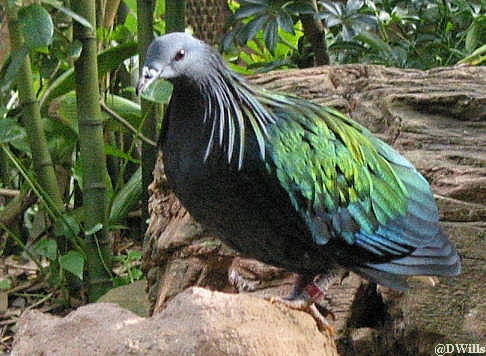
Temminck's Fruit Dove As you exit the bird area, the sounds in the distance of the Kali River Rapids ride remind you where you are and what lies ahead during your day at Disney's Animal Kingdom.


TOURING TIPS

Get your FastPass for Kali River Rapids and then stroll through the Maharajah Jungle Trek.

The nice thing about the Maharajah Jungle Trek is that you go at your own pace, and spend as little or as much time as you wanted to see and photograph the animals. (Aileen Thompson)

Photographer Bruce Carlson on the Tigers!: Taking pictures of the tigers in Asia can be rewarding as well as frustrating. Too often I've seen people leave the area after only a few minutes of observing these beautiful creatures. Although hot summer days will find the tigers relaxing throughout the day, if you arrive at the fountain location within 30 minutes of the park closing, you'll find them anxiously pacing near the gates as they wait to be fed. More than once I've caught tigers jumping on each other, swatting their buddies with their huge paws and even starting a brief altercation. Patience is the key and have that camera near your eye as it could be the highlight photo of the trip.

If you love the tigers on the Maharajah Jungle Trek, but would like to see them do something other than sleep, visit the Jungle Trek at the end of the day, sometime after 4 p.m. The tigers know that they will be going backstage "soon," and they all congregate near the fountain (the first tiger viewing area -- go up the stairs after passing the bats). It's a great opportunity to see them moving around, and often you'll see them chase each other or even take a dip in the water! (Laura G)

Be sure to ask the Guides any questions you might have about the animals you encounter during your trek. Many of the Guides are native to Asia.

Just before entering the aviary you can usually find a Bird Identification Sheet.
For more information on Animal Kingdom Live Entertainment, Visit Steve Soares' WDW Entertainment Website.

KIDS AND CHARACTERS

There are plenty of viewing areas for kids and lots of educational opportunities too.

My 4 year old daughter loved the trail! (Donna S)

Disney Characters are typically not found in Asia.

Animal Kingdom Characters At A Glance 
Character Meet and Greet FAQ!

DINING

For eating opportunties in Asia, check out the Yak and Yeti! Anandapur Ice Cream offers refreshing treats for hot days!

Animal Kingdom Restaurants At A Glance
Menus From Around the World
Vegetarian and Other Special Diets


SHOPPING

Outside the jungle trail, Mandala Gifts has Asian themed souvenirs and tiger apparel available.

INTERESTING FACTS

Nepal, India, Thailand and Indonesia are represented through the architecture, animal carvings and ruins scattered throughout the trail.

You will find the Gibbons on the Nepalese-styled monument tower and at the ruins of a Thai designed temple.

Birds and Animals along the Jungle Trek when it opened:

Amboina King Parrot
Asian Fairy Bluebird
Asian Tiger
Bali mynah
Banteng
Blackbuck Antelope
Crested Wood Partridge
Eld's Deer
Golden-backed Woodpecker
Golden-crested Mynah
Green Jungle Fowl
Green-winged Dove
Green Peafowl
Green-naped Pheasant Ageon
Indian Pygmy Goose
Iris Lorikeet
Jambu Fruit Dove
Komodo Dragon
Magnificent Ground Pigeon
Malayan Flying Fox
Malayan Tapir
New Guinea Masked Plover
Nicobar Pigeon
Orange-bellied Leafbird
Pink-necked Green Pigeon
Plum-headed Parakeet
Red-headed Parrot Finch
Rodrigues Fruit Bat
Saurus Crane
Siamang
Silver-eared Mesia
Sooty-headed Bulbul
Spice Finch
Temminck's Fruit Dove
Timor Sparrow Finch
Treron Pink-necked Pigeon
White Cheeked Gibbon
White-collared Kingfisher
White-headed Munia
White-rumped Shama Thrush
Wompoo Fruit Dove
Yellow-throated Laughing Thrush
Yellow-vented Bulbul


Copyright © R.Y.I. Enterprises, LLC, All Rights Reserved, 1999-2008
Copyright © DWills, All Rights Reserved, 1996-1999
As to Disney artwork/properties: © Disney. All trademarks, service marks, and trade names are proprietary to Disney Enterprises, Inc., its subsidiary, affiliated and related companies, as the case may be.
AllEarsNet.com, All Ears® Newsletter and any other properties owned by RYI Enterprises, LLC
are not affiliated with, authorized or endorsed by, or in any way officially connected with,
The Walt Disney Company, Disney Enterprises, Inc., or any of their affiliates.
Read more ABOUT US or ADVERTISE with us.
For official Disney information, visit http://www.disneyworld.com